
A child abuse charge under Arizona Revised Statute 13-3623 is a felony, and the case can move quickly once it starts. This guide explains how the law defines child abuse, what the prosecution has to prove, what defenses are available, and what happens at each stage of your case.
Key Takeaways
|
What to Do Right Now
|
Step 1: Write down everything you remember about the incident, including dates, times, who was present, and what was said. Step 2: Do not discuss your case with anyone except an attorney, including on social media or with the other people in your community. Step 3: Find an experienced criminal defense attorney before your first court date. Lawyer Listed can match you with one for free. |
What Is Child Abuse Under Arizona Law?
Arizona defines child abuse in ARS 13-3623. The law applies to anyone who has care or custody of a child and causes, allows, or fails to prevent harm to that child. A child is anyone under 18. The same statute also covers abuse of vulnerable adults.
The statute applies to four different states of mind: intentional, knowing, reckless, and criminal negligence. Intentional conduct means you meant to cause harm. Knowing conduct means you knew harm was occurring. Reckless conduct means you were aware of a serious risk and ignored it. Criminal negligence means you failed to recognize a serious risk that a reasonable person would have noticed. The state of mind alleged directly affects how serious the charge is.
You do not have to be the person who directly harmed the child to face charges. If you had care or custody and caused or permitted the child to be harmed or placed in danger, you can be charged under the same statute. This is sometimes called permissive abuse or failure to protect.
What Are the Penalties for Child Abuse in Arizona?
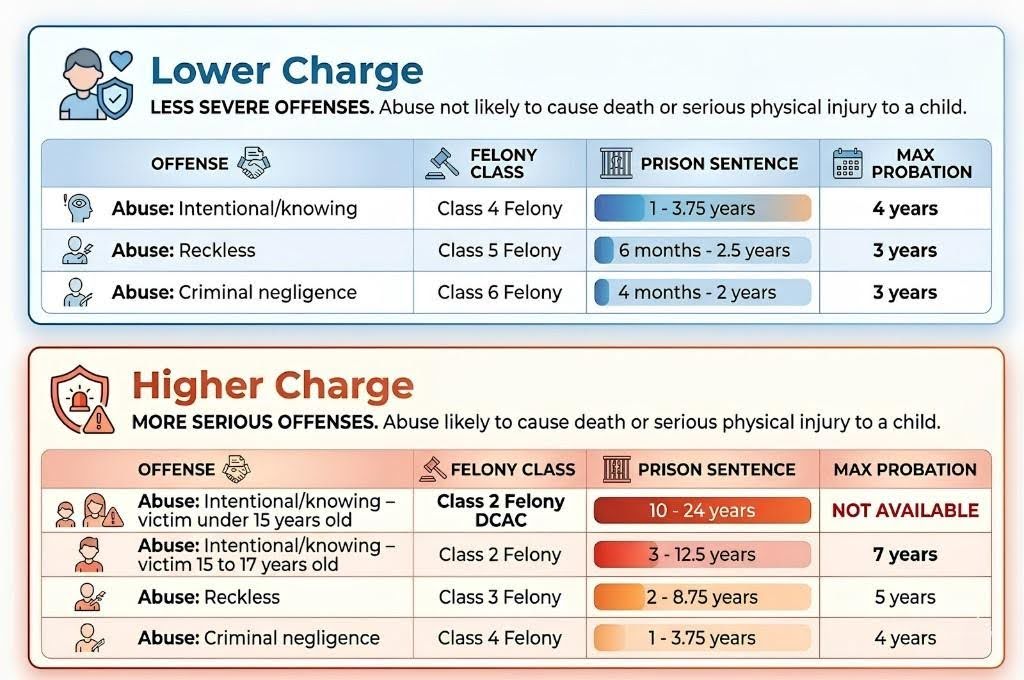
Child abuse penalties in Arizona depend on two factors: the mental state involved and whether the conduct occurred under circumstances likely to cause death or serious physical injury. Intentional or knowing conduct under circumstances likely to cause death or serious physical injury carries the harshest penalties. Child abuse that involves reckless or negligent actions and only minor physical injury is treated more leniently.
What Does the Prosecution Have to Prove?
To convict you of child abuse, the prosecution must prove every element of the charge beyond a reasonable doubt.
- Mental State: The prosecution must prove your state of mind matched one of the four levels the statute requires: intentional, knowing, reckless, or criminally negligent.
- Relationship: The prosecution must prove you had care or custody of the child at the time.
- Conduct:
- The prosecution must prove the conduct happened under the specific circumstances charged, meaning whether it was likely to cause death or serious physical injury.
- The prosecution must also prove the conduct caused physical injury or placed the child in a situation that endangered the child’s health or safety.
If the prosecution cannot prove any one of these elements, then their case fails and the charge should not result in a conviction.
What Defenses Can Be Used Against a Child Abuse Charge?
Several defenses are common in Arizona child abuse cases. The defense that applies in your case depends on the specific facts of your situation.
- Lack of intent: If the injury was accidental and you did not act recklessly or negligently, this can defeat the charge.
- Lawful parental discipline: Arizona law permits reasonable physical discipline that does not rise to the level of abuse.
- False accusations: Unfortunately, false accusations of child abuse may occur in situations like contentious divorce or custody disputes, and a skilled attorney can investigate motive and challenge the credibility of the accusation.
- Insufficient evidence: Lack of evidence is always a possible defense because the burden of proof is on the prosecution and never shifts to you. This means the state, not you, must prove the charge. An attorney can also challenge how evidence was gathered, including statements taken by police or findings from a Department of Child Safety investigation.
Common Myths About This Charge
Myth: If the injury was an accident, I cannot be charged with child abuse.
Reality: Accidents alone are usually not enough for a conviction, since the prosecution must still prove intent, knowledge, recklessness, or criminal negligence. However, you can still be charged and have to fight the case in court, even if you believe the injury was purely accidental.
Myth: Spanking my child is automatically considered child abuse in Arizona.
Reality: Arizona law recognizes reasonable parental discipline as a legal defense. The key question is whether the discipline was reasonable under the circumstances or crossed into excessive force that caused injury.
Frequently Asked Questions
Q: Can I go to jail for a first child abuse charge in Arizona?
A: Yes. All levels of child abuse under ARS 13-3623 are felonies, and even a first offense as a Class 6 felony can carry up to two years in prison. The most serious cases, charged as Class 2 felonies, can carry up to 24 years in prison.
Q: What is the statute of limitations for child abuse in Arizona?
A: Prosecutors generally have seven years from the date of the alleged offense to file child abuse charges in Arizona. This is longer than the limitation period for many other criminal charges.
Q: Will a child abuse charge affect my custody case?
A: Yes. Family court judges routinely consider pending criminal charges when making custody decisions. An attorney who understands both the criminal case and its effect on family court can help you address both at once.
Q: What is the difference between child abuse and child endangerment in Arizona?
A: Child abuse under ARS 13-3623 deals with harm or risk involving a minor and applies to a person who has care or custody of that child. Child endangerment under ARS 13-1201 is broader and applies to placing any person, including, but not limited to, minors, at a substantial risk of injury or death.
Related Arizona Criminal Defense Guides
Child abuse charges sometimes arise alongside domestic violence allegations, especially when the alleged conduct happened in a household setting. Understanding how these charges interact can help you see the full scope of what you are facing.
Understanding ARS Child Abuse (ARS 13-3623)
For a deeper breakdown of how Arizona defines abuse, including specific examples of conduct covered under the statute, see our full explainer on ARS 13-3623.
If the alleged injury to a child was severe, prosecutors may add or substitute an aggravated assault charge alongside child abuse. This guide explains how that charge works.
Talk to an Attorney Who Handles Child Abuse Cases
A child abuse charge moves quickly, and the decisions you make in the first few days can shape the rest of your case. Lawyer Listed’s free matching tool connects you with a criminal defense attorney who handles ARS 13-3623 cases in your Arizona county. There is no cost to get matched and no obligation to hire. Get started today.