
Understanding ARS Shoplifting: ARS 13-1805
Facing shoplifting charges can be overwhelming. The legal system is complicated, and the process can seem confusing. Lawyer Listed provides clear information about the charges and the possible penalties, helping you understand each step of the process.
This guide breaks down Arizona shoplifting laws in clear, straightforward language. It explains the key legal terms, walks you through the sentencing guidelines for shoplifting in Arizona, and answers the most common questions asked by people charged with this crime.
Remember, this information is for educational purposes only and is not a substitute for legal advice from an experienced Arizona criminal defense attorney. If you are charged with shoplifting, let Lawyer Listed match you with your ideal criminal defense lawyer as soon as possible.
What is ARS Shoplifting?

Arizona shoplifting laws cover much more than simply taking an item and walking out of a store without paying. ARS 13 1805 encompasses a broad range of actions, all involving knowingly obtaining goods from inside a retail store with the intent to permanently deprive the owner of those goods. In simpler terms, it means stealing from a commercial store in various ways.
Key Terms
- Intentionally or with intent to means that it was your objective to cause a result or engage in a specific conduct. In other words, you meant to do it.
- Knowingly means you are aware of your actions or the circumstances that make up the offense. It doesn’t require that you know your conduct is illegal; you just need to be conscious of what you are doing or the situation you are in.
Elements of Shoplifting
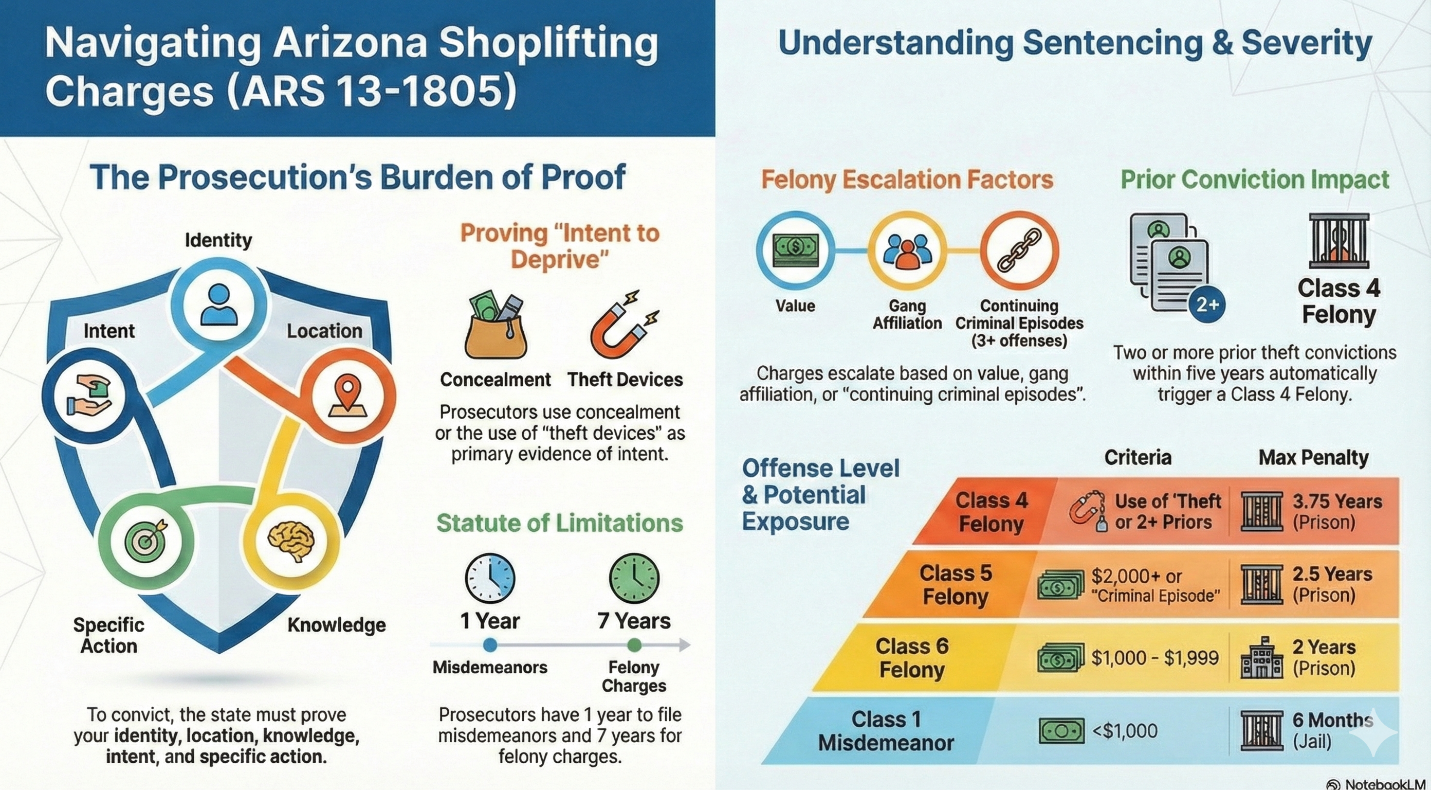
For the prosecution to convict you of shoplifting Arizona, they must prove five key elements beyond a reasonable doubt:
- Identity: You are the person who committed the alleged shoplifting offense.
- Location: The incident occurred inside a retail store.
- Knowledge: You knowingly obtained the merchandise fully aware of your actions.
- Intent: You intended to permanently deprive the store of the goods.
- Action: You either concealed or removed items from the store without paying.
Understanding the Intent behind ARS Shoplifting
Intent to permanently deprive the owner of merchandise is a key element to any conviction for shoplifting. Proving this intent is required regardless of whether the shoplifting charge is based on stealing an item or paying less than the purchase price.
The prosecution may present various types of evidence to demonstrate this intent, including:
- Concealment: Actively hiding the merchandise on your person. For example, hiding merchandise under your clothing, in your purse, or in a bag is considered strong evidence of intent to steal. The act of concealment suggests you were trying to avoid detection and leave without paying.
- Artifice: Using a theft instrument, container, or other device specifically designed to facilitate shoplifting. This might include special bags lined with materials that prevent security tags from triggering alarms or modified containers meant to hide merchandise.
Shoplifting Actions Under ARS 13-1805
Arizona shoplifting laws specifically identify the following actions as shoplifting under the statute:
- Unauthorized Removal of Merchandise: This is the most common and straightforward form of ARS shoplifting. It involves taking an item from its display location or any other area within the store with the intent to steal the item. This includes hiding items in bags, pockets, purses, or anywhere on your person to avoid detection. Walking out with merchandise you haven not paid for falls into this category.
- Fraudulent Purchases: Using a false name, a false identity, or someone else’s account to buy goods also constitutes shoplifting under Arizona laws on shoplifting. This includes charging a purchase to a fictitious person or charging a purchase to another real person without their knowledge or consent. Using someone’s credit card without permission when purchasing items in a store is considered shoplifting under this category.
- Price Tag Manipulation: Deceiving a store by changing, removing, or swapping price tags to pay less than the actual purchase price. This action highlights the intent to defraud the store, which is a crucial component of the charge. Even if you pay something for the item, paying less than the marked price through deceptive means is still shoplifting.
- Other Deceptive Practices: The law also covers additional acts specifically designed to avoid paying for merchandise, including transferring merchandise from one container to another. For instance, placing expensive items in a box marked with a lower price or removing items from their original packaging to conceal their true value.
All these different acts point toward a single objective: obtaining something from a store without paying the full and proper purchase price that the store has set.
Arizona Statute of Limitations for Shoplifting
The statute of limitations is the deadline for prosecutors to file criminal charges after an alleged offense. In shoplifting Arizona cases, the time limit depends on how the offense is classified. If the case is a misdemeanor, prosecutors must file charges within one year of the incident. If the case is a felony, prosecutors have up to seven years from the date of the crime.
Shoplifting ARS Penalties:

The penalties for shoplifting in Arizona depend on several important factors. These factors include the total value of the stolen items, your past criminal history, and the presence of other aggravating factors.
Shoplifting charges are typically classified as misdemeanors when the value of the stolen goods is less than $1,000. However, when the value of stolen goods exceeds $1,000, or when certain aggravating factors are present, shoplifting may be charged as a felony.
| Class | Elements of Offense | Jail/Prison | Probation (max) |
|---|---|---|---|
| Class 1 Misdemeanor | Shoplifting property value of less than $1,000. | Jail: up to 6 months | 3 years |
| Class 6 Felony | Shoplifting property value between $1,000 and $1,999. | Prison: 4 months – 2 years | 3 years |
| Class 5 Felony |
Shoplifting property value of $2,000 or more. Shoplifting as part of a continuing criminal episode. Shoplifting to assist a gang or criminal syndicate. |
Prison: 6 months – 2.5 years | 3 years |
| Class 4 Felony |
Shoplifting using an artifice, instrument, device, or container. Shoplifting with two or more prior theft-related offenses or convictions. |
Prison: 1 – 3.75 years | 4 years |
Frequently Asked Questions (FAQs)

A: Shoplifting under ARS 13-1805 involves knowingly obtaining goods from a retail store with the intent to deprive that store of those goods without paying the proper purchase price. This can happen through various methods, including concealment, removal, fraudulent payment, or price manipulation.
A: A continuing criminal episode is specifically defined under Arizona shoplifting laws as three or more separate shoplifting offenses committed within a 90-day period, where the combined total value of all stolen goods exceeds $1,500. This classification significantly increases the severity of charges and can elevate what might otherwise be misdemeanor offenses to felony-level charges.
A: Using a device, instrument, or container specifically designed to aid in shoplifting significantly increases the severity of your charge under shoplifting laws Arizona. Using such a shoplifting instrument could result in a Class 4 felony charge, even if the value of the shoplifted goods would otherwise result only in a misdemeanor charge. Examples include bags designed to block security sensors or specially modified containers.
A: Yes, under Arizona laws on shoplifting, a merchant or their authorized agent can detain a suspected shoplifter on the store premises for a reasonable period of time and in a reasonable manner if there is good cause to believe that the detained person committed shoplifting. This ability to detain a suspected shoplifter provides the merchant with a legal defense against civil or criminal actions for false arrest or unlawful imprisonment, as long as the detention was conducted reasonably.
A: Yes, minors can be charged with shoplifting Arizona offenses. Additionally, civil lawsuits based on the minor's shoplifting actions may be brought against the minor's parents or legal guardians. This means that a shoplifting incident involving a young person can have legal and financial consequences for the entire family.
A: If this is not your first-time shoplifting charge Arizona penalties become substantially harsher. Under Arizona law, if you commit shoplifting and you have two or more prior offenses such as burglary, shoplifting, robbery, organized retail theft, or theft within the past five years, the new shoplifting charge becomes a Class 4 felony. This applies regardless of the value of the items involved. This means even a low‑value shoplifting case can be treated as a felony if you have a qualifying criminal history.
A: The statute of limitations depends on whether the shoplifting charge is treated as a misdemeanor or a felony. When the offense is classified as a misdemeanor, the State has one year from the date of the incident to file charges. When the offense is charged as a felony, prosecutors have up to seven years to initiate the case. Once the applicable time period expires, the State is generally barred from bringing criminal charges for that specific incident.
A: To find the right lawyer for your case, follow these steps: schedule consultations, verify they are licensed and in good standing with the bar, research their experience, check their specialization, consult with other lawyers about their reputation, read client reviews, and ensure you feel comfortable with them.
Don’t worry if this seems overwhelming; Lawyer Listed has already done the work for you and is ready to match you with an elite lawyer tailored to your needs and your case.
Key Takeaways:
- Definition: Shoplifting, under ARS 13-1805, is knowingly taking merchandise from a retail store with the intent to steal it or pay less than the full purchase price. This can include removing, fraudulently charging, transferring, or concealing the merchandise.
- Elements of ARS shoplifting:
- Identity – You must be the specific person who committed the offense.
- Location – The offense must have occurred in a retail store.
- Knowledge – You must have knowingly taken the merchandise with awareness of your actions.
- Intent – You must have had the intention to steal the merchandise or avoid making full payment.
- Action – You must have concealed or removed items from the store without authorization.
- Actions considered shoplifting:
- Unauthorized removal: Taking items from the store without paying for them.
- Fraudulent purchases: Using a false identity, fake credentials, or stolen payment methods to obtain goods.
- Price tag manipulation: Changing, removing, or swapping price tags to pay less than the marked price.
- Other deceptive practices: Concealing merchandise on your person or transferring it between containers to avoid paying the proper price.
- Sentencing:
- Class 1 Misdemeanor: Merchandise value less than $1,000.
- Jail: up to 6 months
- Probation: up to 3 years
- Class 6 Felony: Merchandise value between $1,000 and $1,999.
- Prison: 4 months to 2 years
- Probation: up to 3 years
- Class 5 Felony: Merchandise value of $2,000 or more, committed as part of a continuing criminal episode, or conducted to assist a gang or criminal syndicate.
- Prison: 6 months to 2.5 years
- Probation: up to 3 years
- Class 4 Felony: Use of theft devices, instruments, or containers, or committed by someone with two or more prior theft-related offenses.
- Prison: 1 to 3.75 years
- Probation: up to 4 years
- Class 1 Misdemeanor: Merchandise value less than $1,000.
- Statute of limitations: Misdemeanor shoplifting must be charged within one year of the incident. Felony shoplifting can be charged up to seven years after the incident.
Next Steps:

Shoplifting ARS convictions carry serious consequences. The charge of ARS shoplifting and the resulting sentence depend on several factors. Lawyer Listed helps you understand the law and your rights to effectively get through this difficult situation.
If you’re facing charges under the Arizona shoplifting laws, engaging a skilled Arizona criminal defense lawyer is important to protect your rights and manage the process. Don’t try navigating the legal system alone. Match with your ideal lawyer at LawyerListed.com and get an experienced criminal defense attorney on your side right away.