
Understanding Aggravated DUI Arizona: ARS 28-1383
Facing aggravated DUI Arizona charges can feel overwhelming. The legal system is complex and often intimidating, especially when you’re unsure what comes next. Lawyer Listed provides clear information about your charges and the possible penalties, helping you understand each step of the process.
This guide explains what you need to know about aggravated DUI under ARS 28-1383, which is sometimes called felony DUI. It breaks down the law in plain language, explains the key legal terms, and shows you what sentencing could look like if you are convicted. It also answers common questions people ask when facing these charges.
Remember, this information is for educational purposes only and is not a substitute for legal advice from an experienced Arizona criminal defense lawyer. If you are charged with aggravated DUI in Arizona, let Lawyer Listed match you with your ideal Arizona DUI attorney as soon as possible.
What is ARS Aggravated DUI in Arizona?

ARS 28-1383 defines aggravated DUI in Arizona, which is one of the most serious of the Arizona drunk driving laws. The definition of Arizona aggravated DUI is divided into two parts:
- Driving under the influence
- Aggravating circumstances
A conviction for ARS aggravated DUI requires proof of both driving under the influence and at least one aggravating factor.
Driving Under the Influence:
Arizona DUI laws define driving under the influence as operating a vehicle or being in actual physical control of a vehicle under any of these conditions:
- While under the influence of alcohol or drugs to the point where you are impaired to the slightest degree.
- With an alcohol concentration of 0.08 or higher within two hours of driving or being in actual physical control of the vehicle. The alcohol must have been consumed either before or while you were driving or in control of the vehicle.
- With any amount of drugs or drug metabolites present in your body.
- While operating a commercial vehicle (such as a semi-truck or bus) with an alcohol concentration of 0.04 or higher.
- While driving a vehicle for hire (such as a taxi) or working as a transportation network company driver (such as for Uber or Lyft) with an alcohol concentration of 0.04 or higher.
Aggravating Factors:
ARS 28-1383 lists the following aggravating factors that can elevate a standard DUI to a felony DUI in Arizona.
- Multiple DUI Convictions: Being convicted of a third or subsequent DUI offense within a seven-year period.
- DUI with a Restricted License: Committing a DUI while your driver’s license or driving privileges are suspended, canceled, revoked, or refused.
- DUI with a Minor in the Vehicle: Committing a DUI while a child under 15 years old is present in your vehicle.
- Failure to Use an Ignition Interlock Device: Committing a DUI when you are required by court order to have a certified ignition interlock device installed and you either don’t have one or fail to properly use it.
- Wrong Way Driving: Committing a DUI while driving the wrong way on a highway.
Each of these aggravating circumstances carries serious weight in court and can dramatically increase the penalties you face compared to a standard DUI charge.
Key Concepts of Aggravated DUI Arizona
Motor Vehicle: A device that is used to carry people or property on a public road. Motor vehicles do not include electric bicycles, electric standup scooters, and devices moved by human power.
Actual Physical Control: Present or imminent control of the vehicle in a way that poses a real danger to yourself or others. When determining actual physical control, the following evidence is considered:
Was the vehicle running?
Was the ignition on?
Where was the ignition key?
Where were you sitting in the vehicle, and in what position?
Were you awake or asleep?
Were the headlights on?
Where was the vehicle stopped?
Did you voluntarily pull off the road?
What time of day was it?
What were the weather conditions?
Was the heater or air conditioner running?
Were the windows up or down?
Impairment: Under Arizona DUI laws, “impaired to the slightest degree” means any negative effect on your ability to operate a vehicle safely due to drugs or alcohol. This standard doesn’t require a specific alcohol or drug level. That means you can be impaired even if your alcohol concentration is below 0.08.
Alcohol Concentration: The amount of alcohol in your system. Alcohol concentration is usually measured through blood or breath tests. Generally, an alcohol concentration of 0.08 or higher within two hours of driving qualifies as a DUI in Arizona. For commercial drivers, an alcohol concentration of 0.04 or higher within two hours of driving is enough for a DUI conviction.
Drugs: Many different drugs can lead to DUI charges under ARS 28-1381. The drugs associated with DUI charges are listed in ARS 13-3401. Most fall into one of four categories: cannabis (marijuana), dangerous drugs, narcotic drugs, and prescription-only medications.
Ignition Interlock Device: A breath‑testing device that connects to a vehicle’s ignition system and prevents the vehicle from starting unless the driver provides a breath sample with an alcohol level below a preset limit.
Arizona Statute of Limitations for ARS Aggravated DUI
The statute of limitations is the deadline for filing criminal charges after an alleged offense. For aggravated DUI, prosecutors generally have up to seven years from the date of the alleged offense to bring charges.
Arizona DUI Penalty Chart

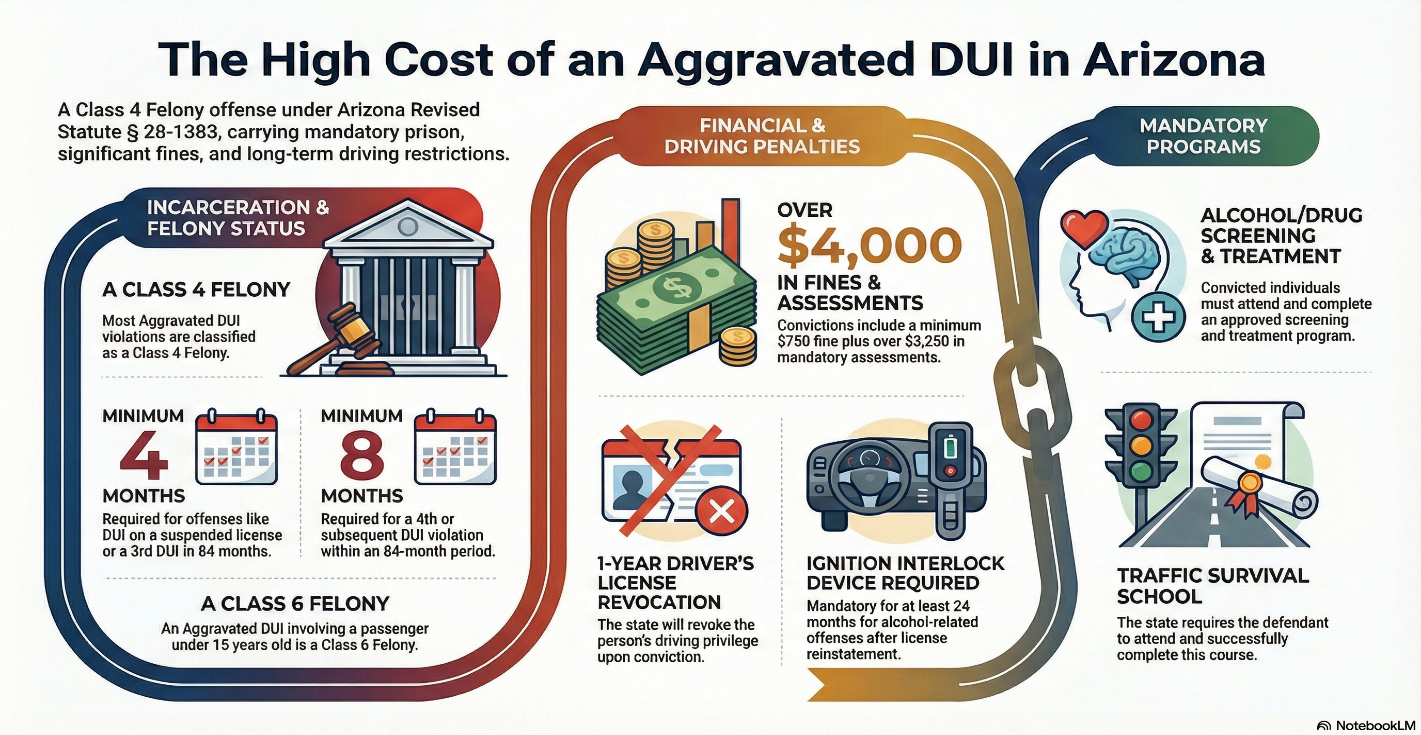
The penalties for aggravated DUI in Arizona are severe and can vary significantly depending on several factors. These factors include the specific charge you’re facing, your prior criminal history, and the unique circumstances surrounding your case. The following Arizona DUI penalty chart provides a detailed overview of the potential consequences for each type of aggravated DUI offense:
| Multiple Convictions | Restricted Licenses | Ignition Interlock | Wrong Way | Minor in Vehicle | |
|---|---|---|---|---|---|
| Class | Class 4 felony | Class 4 felony | Class 4 felony | Class 4 felony | Class 6 felony |
| Jail/Prison (minimum) | Prison: 4 months or 8 months if 3+ prior DUIs | Prison: 4 months | Prison: 4 months | Prison: 4 months | Jail: 10 – 90 days depending on DUI facts |
| Probation | Up to 4 years | Up to 4 years | Up to 4 years | Up to 4 years | Up to 3 years |
| DUI Fines in Arizona | $4,000 | $4,000 | $4,000 | $4,000 | $4,000 |
| Alcohol/Drug Treatment | Yes | Yes | Yes | Yes | Yes |
| Traffic School | Yes | Yes | Yes | Yes | Yes |
| License Revocation | Yes | Yes | Yes | Yes | Yes |
| Interlock Device | Alcohol DUI: Yes | Alcohol DUI: Yes | Alcohol DUI: Yes | Alcohol DUI: Yes | Alcohol DUI: Yes |
Frequently Asked Questions (FAQs)

A: An aggravated DUI in Arizona means you were driving under the influence of alcohol or drugs and one of several aggravating factors also applied. These aggravating factors include driving with a suspended, revoked, or canceled license; having two prior DUI convictions within the past seven years; having a child under 15 in the vehicle; violating a court order that required you to use an ignition interlock device; or driving the wrong way on a highway while impaired.
A: Felony DUI is often used interchangeably with aggravated DUI. While DUI is typically a misdemeanor, it becomes a felony DUI under certain circumstances. These circumstances include a third DUI offense within seven years, DUI with a suspended or revoked license, committing a DUI with a minor in the vehicle, or a DUI while driving the wrong way on a highway while impaired.
A: Yes, incarceration is mandatory if you are convicted of aggravated DUI Arizona charges. For a Class 4 felony aggravated DUI, you face a minimum of four months in prison, and that minimum increases to eight months if you have three or more prior DUI convictions. For a Class 6 felony aggravated DUI, the law requires 10 to 90 days in jail, depending on the facts of your underlying DUI. These mandatory sentences cannot be waived or fully suspended.
A: Simply crossing the median while driving under the influence will likely be charged as a misdemeanor DUI. The wrong way DUI provision is specifically limited to driving the wrong way on a designated highway. The law excludes situations where you cross a median accidentally or where your vehicle comes to rest facing the wrong direction after a collision.
A: Lack of knowledge may not be enough to avoid an aggravated DUI conviction. The State must prove that you knew or had reason to know that your license was suspended, canceled, revoked, or refused. The knowledge of suspension or revocation may be presumed if a notice of suspension or revocation was properly mailed to your last known address. This permissive presumption may be rebutted by presenting evidence that you didn’t know that your license was suspended or revoked.
A: In Arizona, prosecutors have seven years to initiate criminal charges for aggravated DUI. This means that if more than seven years have passed since the alleged offense, the State is typically prohibited from bringing charges.
A: To find the right lawyer for your case, follow these steps: schedule consultations, verify they are licensed and in good standing with the bar, research their experience, check their specialization, consult with other lawyers about their reputation, read client reviews, and ensure you feel comfortable with them.
Don’t worry if this seems overwhelming; Lawyer Listed has already done the work for you and is ready to match you with an elite lawyer tailored to your needs and your case.
Key Takeaways:

- Definition: Aggravated DUI Arizona charges require both driving under the influence and an aggravating factor listed in ARS 28-1383.
- Elements of the Crime:
- DUI: Arizona DUI laws apply when a driver is impaired by alcohol or drugs, has an alcohol concentration of 0.08+ within two hours of driving, has drugs or metabolites in their system, or is operating a commercial or for‑hire vehicle with an alcohol concentration of 0.04+.
- Aggravating factors: Aggravated DUI occurs when a DUI is combined with any of the following aggravating factors:
- A third DUI within seven years
- Driving on a suspended or revoked license
- Having a child under 15 in the vehicle
- Failing to use a required ignition interlock device
- Driving the wrong way on a highway while impaired
- Aggravating factors: Aggravated DUI occurs when a DUI is combined with any of the following aggravating factors:
- Sentencing:
- Multiple DUIs:
- Classification: Class 4 felony
- Prison: Minimum of 4 months in prison (or 8 months if it’s your third or more DUI in seven years)
- Probation: Up to 4 years of probation
- Fines: $4,000
- Other: Mandatory treatment and traffic school, a license revocation, and an ignition interlock device if the DUI involved alcohol
- Driving on a suspended or revoked license:
- Classification: Class 4 felony
- Prison: Minimum of 4 months
- Probation: Up to 4 years of probation
- Fines: $4,000
- Other: Mandatory treatment and traffic school, a license revocation, and an ignition interlock device if the DUI involved alcohol
- Ignoring an ignition interlock requirement:
- Classification: Class 4 felony
- Prison: Minimum of 4 months
- Probation: Up to 4 years of probation
- Fines: $4,000
- Other: Mandatory treatment and traffic school, a license revocation, and an ignition interlock device if the DUI involved alcohol
- Wrong‑way driving while impaired:
- Classification: Class 4 felony
- Prison: Minimum of 4 months
- Probation: Up to 4 years of probation
- Fines: $4,000
- Other: Mandatory treatment and traffic school, a license revocation, and an ignition interlock device if the DUI involved alcohol
- DUI with a child under 15 in the car:
- Classification: Class 6 felony
- Jail: Minimum 10 to 90 days
- Probation: Up to 3 years of probation
- Fines: $4,000
- Other: Mandatory treatment and traffic school, a license revocation, and an ignition interlock device if the DUI involved alcohol
- Multiple DUIs:
- Statute of limitations: The statute of limitations for ARS aggravated DUI is seven years from the date of the offense.
Next Steps:

An aggravated DUI in Arizona is a serious criminal offense with life-changing consequences. The specific charges you face and the resulting sentence depend on many factors, including your prior record, the exact circumstances of your arrest, and the evidence against you. Lawyer Listed meets you where you are and helps you understand the law and your rights.
If you’re facing charges for Arizona aggravated DUI under ARS 28-1383, engaging a skilled criminal defense attorney is important to protect your rights and manage the process. Don’t try to navigate the legal system alone; match with your ideal Arizona DUI attorney at LawyerListed.com and get an experienced criminal defense lawyer on your side right away.