
Understanding ARS Aggravated Domestic Violence: ARS 13-3601.02
Facing charges for aggravated domestic violence can feel overwhelming. The legal system can feel complex and intimidating, especially when you’re trying to understand what you’re up against. Understanding the specific details of your charges and the potential penalties is a crucial first step in successfully navigating the legal system.
This guide explains what you need to know about aggravated domestic violence under ARS 13-3601.02. It breaks down the law in plain language, explains the key legal terms, and shows you what sentencing could look like if you’re convicted. It also answers common questions people ask when facing these charges.
Remember, this information is for educational purposes only and is not a substitute for legal advice from an experienced Arizona criminal defense lawyer. If you are charged with aggravated domestic violence, let Lawyer Listed match you with your ideal Arizona defense attorney as soon as possible.
What is ARS Aggravated Domestic Violence?

Aggravated domestic violence involves a pattern of domestic violence offenses over time. It is not about one isolated incident but about multiple offenses within a set timeframe that show ongoing abusive behavior.
Elements of Aggravated Domestic Violence: ARS 13 3601.02
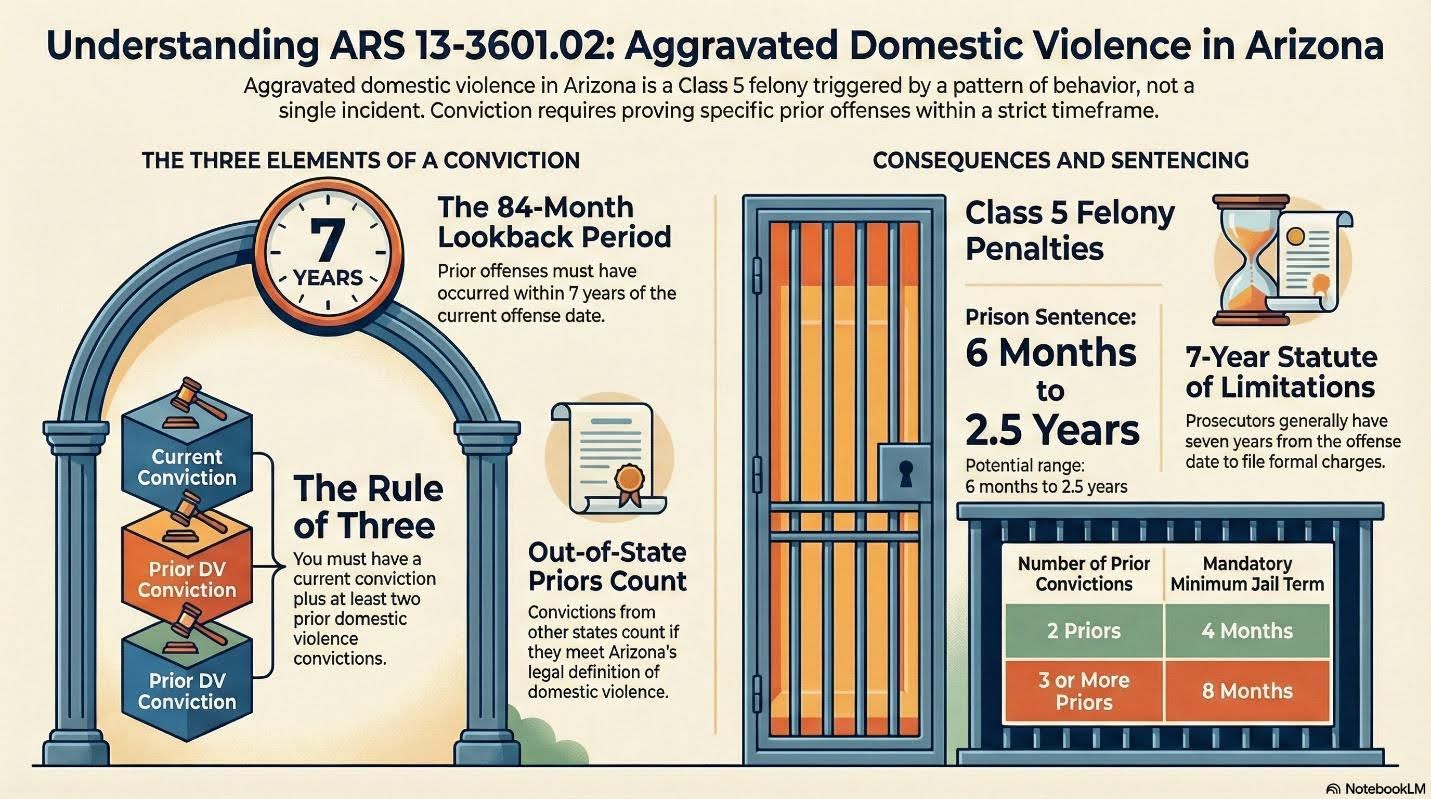
To convict you of aggravated domestic violence, the prosecution must prove three elements beyond a reasonable doubt:
- You are convicted of the domestic violence offense that is charged (current offense)
- You have two or more prior convictions for domestic violence offenses (prior convictions)
- The offense dates of your prior convictions are within 84 months (7 years) of the current offense date
Prior Domestic Violence Convictions
ARS 13-3601.02 focuses on when the prior offenses actually happened, not when you were convicted of them. This distinction matters when calculating the 84-month lookback period. Additionally, your prior offenses do not need to have occurred in Arizona. If you were convicted of domestic violence offenses in other states, those convictions count toward aggravated domestic violence charges if they would be considered domestic violence under Arizona law.
Underlying Charge: Domestic Violence
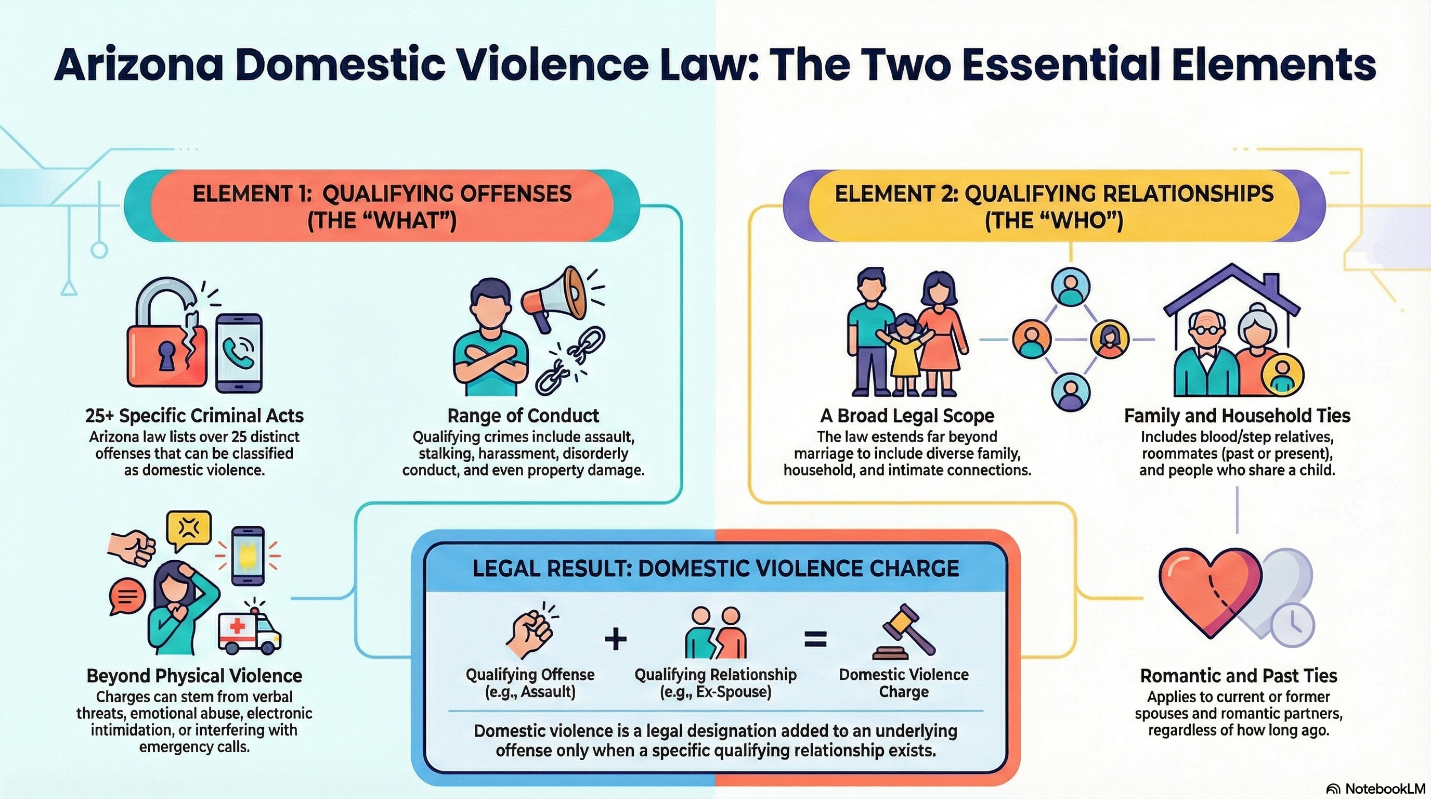
Domestic violence in Arizona is defined broadly and extends far beyond physical fights between spouses. For an act to qualify as domestic violence, two elements must be present: a qualifying offense and a qualifying relationship. In practice, the prosecution must prove beyond a reasonable doubt that you committed one of the offenses listed in ARS 13‑3601 against a person with whom you had a legally recognized domestic relationship.
Qualifying Offenses:
The qualifying offenses under Arizona’s domestic violence laws encompass a broad range of conduct. These offenses include physical assault, verbal threats, intimidation, emotional abuse, harassment, and even property damage. ARS 13‑3601 identifies more than 25 separate offenses that can be charged as domestic violence when they occur within a qualifying relationship.
Qualifying Relationships:
A qualifying offense alone is not enough for an act to be charged as domestic violence in Arizona. The offense must occur within a qualifying relationship, as defined in ARS 13‑3601. This definition is intentionally broad and extends beyond just married couples. Arizona law recognizes that abuse can occur in many different family, household, and intimate partner contexts.
The following types of relationships qualify under ARS 13‑3601:
- Marriage: Current or former spouses are considered to be in a qualifying domestic relationship. The relationship qualifies whether the marriage is ongoing or ended years earlier.
- Cohabitation: Current or former cohabitants qualify if they live or previously lived together. Marriage is not required. Even brief periods of sharing a residence as partners or roommates can establish a qualifying relationship.
- Child in common: Parents who share a child, biological or adopted, are automatically in a qualifying relationship. This also applies when the alleged victim is pregnant with the defendant’s child, regardless of marriage or cohabitation.
- Blood or step-family relationships: Family members related by blood or marriage qualify, including children, stepchildren, parents, stepparents, siblings, stepsiblings, grandparents, step‑grandparents, grandchildren, step‑grandchildren, and in‑laws. Arizona law recognizes a wide range of familial connections.
- Romantic or sexual relationships: Current or former partners qualify if the relationship involved a romantic or sexual connection. Courts look at the nature of the relationship, how long it lasted, how often the parties interacted, and, if it has ended, how much time has passed since then. Even casual dating relationships may qualify if these factors are met.
Arizona Statute of Limitations for Aggravated Domestic Violence
The statute of limitations is the deadline for filing criminal charges after an alleged offense. For aggravated domestic violence, prosecutors generally have up to seven years from the date of the alleged offense to bring charges.
Sentencing for Aggravated Domestic Violence

The penalties for aggravated domestic violence in Arizona are severe and can dramatically impact your future. The consequences you face depend on several factors, including the specific charge against you, your prior criminal history, and the particular circumstances surrounding the alleged crime. Understanding these potential penalties is essential as you prepare your defense.
The following table summarizes the potential consequences for an aggravated domestic violence conviction:
| Offense | Charge | Prison | Probation |
|---|---|---|---|
| Aggravated domestic violence | Class 5 felony | 6 months – 2.5 years | 3 years |
The number of prior domestic violence convictions you have within the 84‑month lookback period directly determines the minimum jail term you must serve. If you have two or more domestic violence convictions, Arizona law requires a minimum jail term before probation can begin.
| Prior Convictions | Jail | Statutory Language |
|---|---|---|
| 2 prior domestic violence convictions | 4 months | Not eligible for probation, pardon, commutation or suspension of sentence or release on any other basis until the person has served not less than four months in jail. |
| 3 or more prior domestic violence convictions | 8 months | Not eligible for probation, pardon, commutation or suspension of sentence or release on any other basis until the person has served not less than eight months in jail. |
Frequently Asked Questions (FAQs)

A: Aggravated domestic violence applies when you commit a third or subsequent domestic violence offense within an 84‑month (7‑year) period. This law is meant to address repeat offenses and ongoing patterns of abuse, not one‑time or isolated incidents.
A: In Arizona, domestic violence occurs when you commit one of the qualifying offenses against someone with whom you have a qualifying relationship. These offenses include physical harm, threats, harassment, stalking, intimidation, and other forms of abusive conduct. What matters is not just the behavior but who the behavior is directed toward—such as a spouse, former partner, roommate, or family member.
A: Yes. Prior domestic violence convictions from other states or tribal courts can count against you for purposes of aggravated domestic violence under ARS 13‑3601.02. What matters is whether the out‑of‑state offense would qualify as domestic violence under Arizona law if it had occurred here. This means you can face aggravated domestic violence charges in Arizona even if some or all of your prior convictions happened out of state.
A: No. Your prior offenses do not all have to be misdemeanors. Arizona law allows a mix of misdemeanor and felony domestic violence convictions to count toward aggravated domestic violence. What matters is simply the number of prior domestic violence offenses within the 84‑month (7‑year) period, regardless of how each offense was classified.
A: The 84‑month lookback period is based on the dates you committed the prior offenses, not the dates you were convicted. To be charged under ARS 13‑3601.02, the offense dates of your prior domestic violence convictions must fall within 84 months (7 years) of the offense date of your current charge. The conviction dates play no role in this calculation.
A: In Arizona, prosecutors have seven years to initiate criminal charges for aggravated domestic violence. This means that if more than seven years have passed since the alleged offense, the State is typically prohibited from bringing charges.
A: To find the right lawyer for your case, follow these steps: schedule consultations, verify they are licensed and in good standing with the bar, research their experience, check their specialization, consult with other lawyers about their reputation, read client reviews, and ensure you feel comfortable with them.
Don’t worry if this seems overwhelming; Lawyer Listed has already done the work for you and is ready to match you with an elite lawyer tailored to your needs and your case.
Key Takeaways:
- Definition: Aggravated domestic violence, under ARS 13-3601.02, involves a pattern of domestic violence offenses, not a single isolated incident. It applies if you commit multiple domestic violence offenses within a specific timeframe that shows ongoing abusive behavior.
- Elements of the Crime: The prosecution must prove three elements beyond a reasonable doubt to convict you of aggravated domestic violence:
- A current conviction for a domestic violence offense
- Two or more prior convictions for domestic violence offenses
- Prior offenses were committed within 84 months (7 years) of the current offense date
- Underlying Domestic Violence:
- Qualifying Offenses: Arizona recognizes over 25 different statutory offenses that can qualify as domestic violence. These include physical assault, making threats, intimidation, emotional abuse, harassment, stalking, and property damage. The breadth of these offenses means many different types of conduct can lead to domestic violence charges.
- Qualifying Relationships: Domestic violence charges apply to offenses committed within specific relationships. These include married couples or formerly married couples, people who live together or previously lived together (cohabitants), parents who share a child in common, blood relatives or step-relatives, and current or former romantic partners.
- Sentencing: Aggravated domestic violence carries different penalties depending on the circumstances of the crime.
- Aggravated domestic violence: Classified as a Class 5 felony with a potential prison sentence ranging from 6 months to 2.5 years and/or up to 3 years of probation.
- Mandatory jail:
- If you have 2 prior domestic violence convictions, you must serve a minimum of 4 months in jail before any probation can begin.
- If you have 3 or more prior domestic violence convictions, you must serve a minimum of 8 months in jail before any probation can begin.
- Statute of limitations: The statute of limitations for ARS aggravated domestic violence is seven years from the date of the offense.
Next Steps:

Aggravated domestic violence is a serious criminal allegation with consequences that can affect the rest of your life. Outcomes depend on many factors. Lawyer Listed meets you where you are and helps you understand the law and your rights.
If you’re facing aggravated domestic violence Arizona charges, engaging a skilled criminal defense attorney is important to protect your rights and manage the process. Don’t try navigating the legal system alone; match with your ideal lawyer at LawyerListed.com and get an experienced criminal defense lawyer on your side right away.